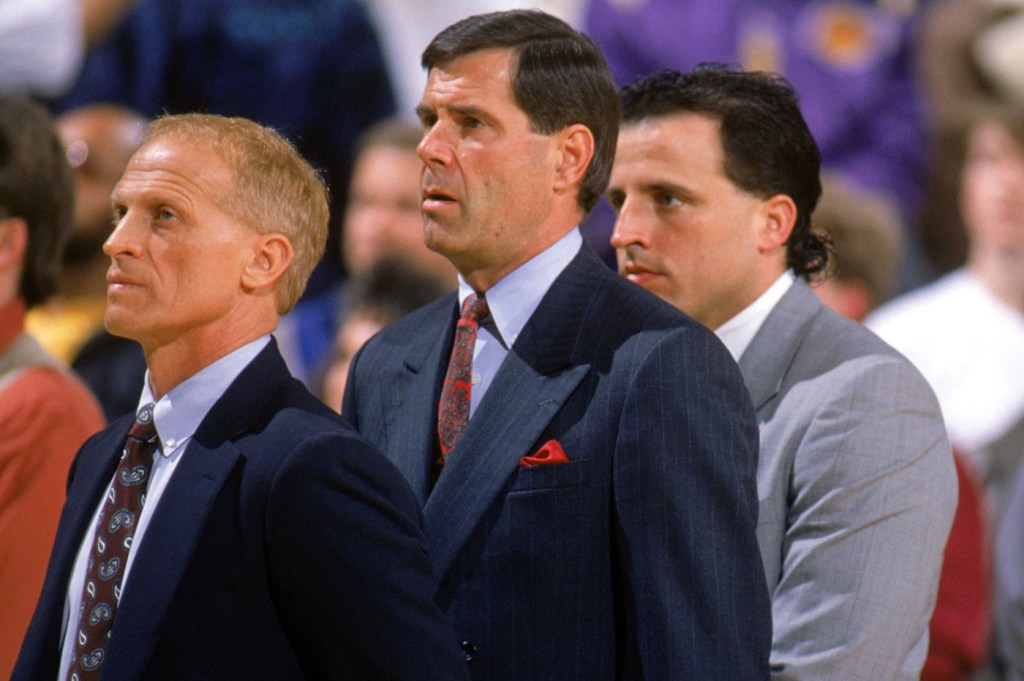
With the Wolves first preseason game coming on Tuesday, the question every Wolves fan is asking themselves is of course, “if the eight most winning Wolves coaches of all time got together and conducted a draft of all time Timberwolves, how would it shake out?”
The Rules
- Each player can only be drafted once. When Flip Saunders takes 2004 Kevin Garnett first, Tom Thibodeau can’t take 2003 KG with the second pick.
- These are the picks that I’m projecting these coaches would make, not necessarily the best or most logical choice at every position
- Teams will be evaluated both subjectively and objectively, with things like chemistry and fit factored into the subjective breakdown, and a more statistical analysis for the objective side
- It’s a snake draft with draft order determined by all time wins as a Timberwolves coach
The Coaches
- Flip Saunders: Easily the winningest coach of all time, Flip is the gold standard of Timberwolves coaches. Yes his time as coach coincided with KG’s prime, so a lot of success can be attributed to that. But the Wolves made the playoffs eight years in a row when Flip was coach, and he led the team in the season they went to the conference finals. His teams also didn’t take many threes, even for the era he coached in.
- Tom Thibodeau: While Thibodeau was a bad front office executive, he wasn’t a bad coach for the Timberwolves. We know that he likes to ride his starters, likes players that played for him in Chicago, and helped engineer an offense that wasn’t pretty but was effective in large part because it minimized turnovers. His defensive reputation didn’t hold up in his time in Minnesota, but part of that can be attributed to personnel. Towns did not turn out to be Joakim Noah so Thib’s defensive approach didn’t pan out the way he thought it would.
- Rick Adelman: Rick Adelman coached really fun teams in Portland, Sacramento, and Houston before he joined the Wolves in 2011. His teams in Minnesota were above average in pace, matching his approach in Portland and Sacramento when his teams led the league for fastest pace. And his teams in Houston were very strong defensively despite his offense centric reputation. And while Thibodeau is the Wolves coach that is best known for getting retreads from his previous teams, Adelman was quietly nearly as guilty of it. It made sense when it was Kevin Martin, it made less sense with Chase Budinger and Brad Miller.
- Chris Finch: After a season and a half Finch is already the fourth winningest Wolves coach of all time. His team led the league in pace last year, but that may have been Finch just fitting his system to the personnel he had at the time.
- Dwane Casey: A coach that was unjustly fired for being 20-20 for a team that definitely wasn’t better than 20-20. After Casey got fired, the Wolves went 12-30 for the rest of the season. Casey had a reputation as a defensive coach that plays a slower pace on offense. But his teams in Toronto were very effective on offense, even if they weren’t running up and down the court. Also yes, the fifth winningest coach in Wolves history has 53 wins.
- Bill Musselman: The Wolves first coach clocks in at 51 wins across his first two seasons. The Wolves actually allowed only 99.4 points per game in their inaugural season in 1990, good for second best in the league. Of course, by a glacially slow pace that was the slowest in the league. The next season the Wolves would go 29-53, which is a better win percentage than any of the three coaches that followed him.
- Ryan Saunders: I don’t have a whole lot to say about Ryan Saunders tenure as coach, other than everybody said he was a nice guy that was maybe not ready to be an NBA head coach. His teams played at a quick pace and shot a bunch of threes, even though many of his players were legitimately awful three point shooters.
- Kevin McHale: Yes, the eighth winningest coach in Timberwolves history is Kevin McHale, who never started a season as head coach. Twice he filled in as interim after firing the head coach. But in both cases, McHale led the team to a better winning percentage during the season than the coach he fired. We know as a front office executive Kevin McHale enjoyed targeting big men with post moves, making trades with the Celtics, and making franchise wrecking decisions like promising Joe Smith things that were against the rules, costing his team a handful of first round draft picks, but still somehow keeping his job. He also coached the Houston Rockets (taking over after Adelman left) and was mostly effective for a while, with two seasons of 50+ wins. Of course, prime James Harden was helpful to that cause.
The Draft, Rounds 1-3
| Round 1 | Round 2 | Round 3 | |
| Flip | Kevin Garnett (1) | Chauncey Billups (16) | Tom Gugliotta (17) |
| Thibs | Jimmy Butler (2) | Terrell Brandon (15) | Taj Gibson (18) |
| Adelman | Karl-Anthony Towns (3) | Ricky Rubio (14) | Latrell Sprewell (19) |
| Finch | Kevin Love (4) | Anthony Edwards (13) | Andrei Kirilenko (20) |
| Casey | Sam Cassell (5) | Andrew Wiggins (12) | Gorgui Dieng (21) |
| Musselman | Tony Campbell (6) | Nikola Pekovic (11) | Christian Laettner (22) |
| Ryan | Stephon Marbury (7) | Wally Szczerbiak (10) | Zach Lavine (23) |
| McHale | Al Jefferson (8) | Joe Smith (9) | Pooh Richardson (24) |
No big surprises in the first round, Thibs of course takes Jimmy over KAT, even though there are way fewer impact bigs than wings on the draft board. Ryan Saunders drafts Marbury, one of the flashiest and most overrated Wolves of all time. In round 2 McHale takes Joe Smith because that’s all he knows how to do, and Thibs actually makes a great pick in Terrell Brandon. He follows it up with Taj, worried that he may not be available by the time the picks snake back to him.
Best pick of rounds 1-3: KG, obviously
Worst pick of rounds 1-3: Stephon Marbury. If not Marbury then Joe Smith. Drafting Lavine in round three when you already have Marbury and Wally also doesn’t make a lot of sense, Ryan should build a basketball team that fits rather than just drafting guys that take a lot of shots.
Rounds 4-6
| Round 4 | Round 5 | Round 6 | |
| Flip | Trenton Hassell (32) | Dean Garrett (33) | Isaiah Rider (48) |
| Thibs | Corey Brewer (31) | Derrick Rose (34) | Felton Spencer (47) |
| Adelman | Fred Hoiberg (30) | Terry Porter (35) | Jaden McDaniels (46) |
| Finch | Jarred Vanderbilt (29) | D’Angelo Russell (36) | Patrick Beverly (45) |
| Casey | Robert Covington (28) | Ty Corbin (37) | Ryan Gomes (44) |
| Musselman | Michael Williams (27) | Ricky Davis (38) | Laphonso Ellis (43) |
| Ryan | Dario Saric (26) | Naz Reid (39) | Rasho Nesterovic (42) |
| McHale | Sam Mitchell (25) | Kevin Martin (40) | Malik Sealy (41) |
Best pick of rounds 4-6: Kevin Martin is really good value in round 5, so I’ll go with him even though I’m a big Terry Porter and Ryan Gomes fan
Worst pick of rounds 4-6: I understand that there’s a dearth of big men and that Ryan Saunders loves players that take threes, but Naz was a reach in round 5.
Rounds 7-9
| Round 7 | Round 8 | Round 9 | |
| Flip | Gary Trent (49) | Kendall Gill (64) | Tyus Jones (65) |
| Thibs | Josh Okogie (50) | Ervin Johnson (63) | Luol Deng (66) |
| Adelman | Anthony Tolliver (51) | Martell Webster (62) | Randy Foye (67) |
| Finch | Mike Miller (52) | Thaddeus Young (61) | Wesley Johnson (68) |
| Casey | Eddie Griffin (53) | Doug West (60) | Mark Blount (69) |
| Musselman | Troy Hudson (54) | Dante Cunningham (59) | Tod Murphy (70) |
| Ryan | Malik Beasley (55) | Taurean Prince (58) | Derrick Williams (71) |
| McHale | Anthony Peeler (56) | Nemanja Bjelicia (57) | Jeff Teague (72) |
Best pick of rounds 7-9: Well, if you believe if in the on/off court splits, it’s gotta be Luol Deng. But the eye test makes me think it’s actually either Tyus Jones or Jeff Teague. That’s really good value in Round 9, though there point guard is the position with the greatest depth in the draft so it makes sense.
Worst pick of rounds 7-9: We’re getting late in a not very deep draft here, so it’s hard to be too critical of any of these picks given the other remaining options. But I’ll say Martell Webster, because he was always a player that was a good fit in theory but never actually was in reality.
Rounds 10-12
| Round 10 | Round 11 | Round 12 | |
| Flip | Sean Rooks (80) | Mark Madsen (81) | Jaylen Nowell (96) |
| Thibs | Marcus Banks (79) | Craig Smith (82) | Wayne Ellington (95) |
| Adelman | Brad Miller (78) | Bobby Jackson (83) | Chase Budinger (94) |
| Finch | Darko Milicic (77) | JJ Barea (84) | Spud Webb (93) |
| Casey | Mike James (76) | Michael Beasley (85) | Oliver Miller (92) |
| Musselman | Cherokee Parks (75) | Jamal Crawford (86) | Ramon Sessions (91) |
| Ryan | Luke Ridnour (74) | Shabazz Muhammed (87) | Chuck Person (90) |
| McHale | Marko Jaric (73) | Rashad McCants (88) | Michael Olowokandi (89) |
Best pick of rounds 10-12: Craig Smith and Wayne Ellington are both actually great picks for rounds 11-12, given the options on the board. Too bad Thibs would never give either of them any playing time. Bobby Jackson is a really good value in round 11 too, as is Nowell with the final pick of the draft.
Worst pick of rounds 10-12: Again, tough to fault anyone too much for picks they make this late. These guys probably won’t see a whole lot of action. But Adelman’s reaching for Miller in a big way.
Team Flip
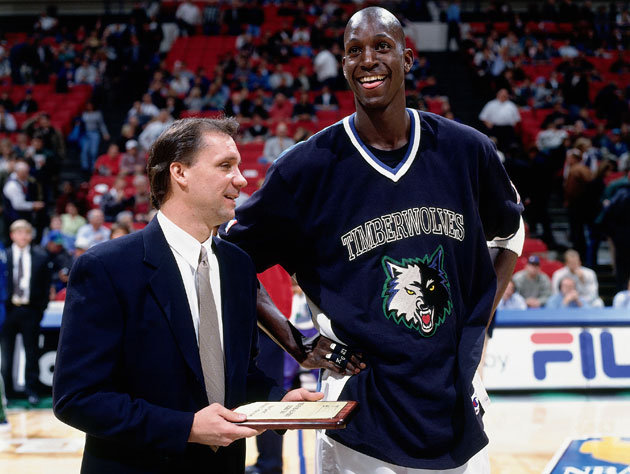
Starting Five: Chauncey Billups, Trenton Hassell, Tom Gugliotta, Kevin Garnett, Dean Garrett
Sixth Man: Tyus Jones
Role Players: Isaiah Rider, Jaylen Nowell, Gary Trent, Kendall Gill, Mark Madsen
Bench Warmers: Sean Rooks
Having the number one pick is extremely valuable in the Timberwolves draft, and it’s a no brainer for any of the coaches. Flip took KG and built his team around him. By the time the snake came back though, the top four point guards in the draft were all off the board. When Chauncey played with the Wolves in 2002 he wasn’t yet what he would become in Detroit, but he’s a solid starting point guard that can pair with Tyus Jones in the backcourt to level up the playmaking when necessary, even if it results in a lack of size.
To fill around KG you want another go to scorer for the fourth quarter, and prime Gugliotta is a good get at 17 overall. Trenton Hassell and Dean Garrett are solid role players that will play defense at a high level. Kendall Gill had some nice moments late in his career with the Timberwolves in 2003 and is a nice swing man off the bench, while either Jaylen Nowell or Isaiah Rider can fill the bench sparkplug role. For backup bigs Flip has Gary Trent, Mark Madsen, and Sean Rooks. None remarkable, but KG can put in 39 minutes a game and Gugliotta can shift to the four some.
On the minutes distribution KG and Googs would end up playing really heavy minutes, with more equal distribution after that. An 11 man rotation during the regular season, with it shrinking down to 8 or nine in the playoffs.
Team Thibs
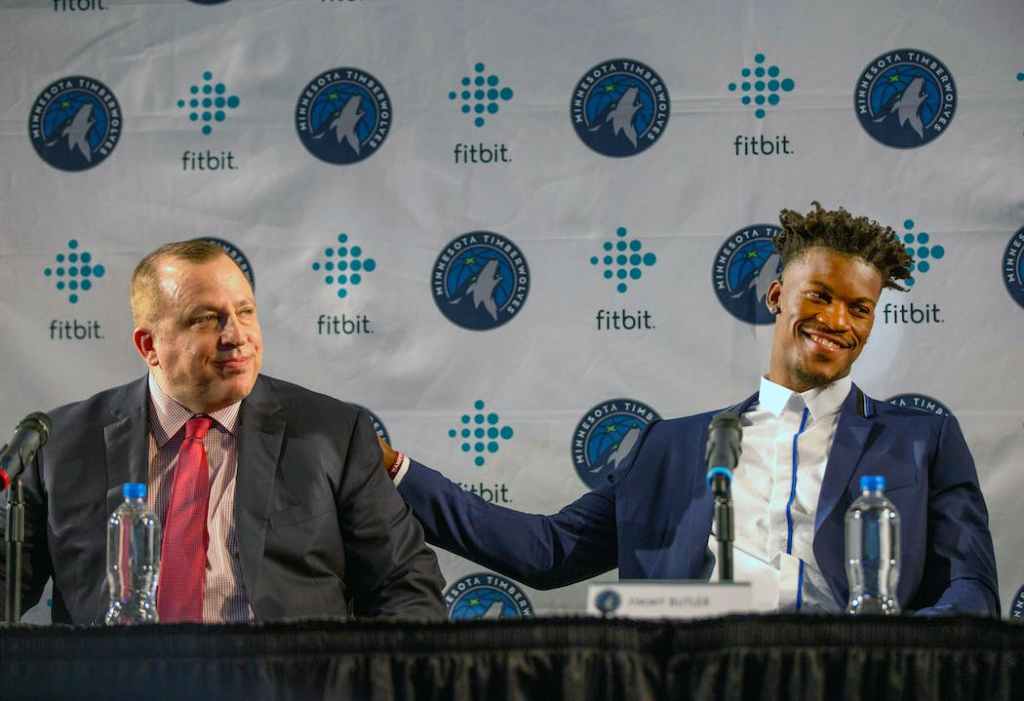
Starting Five: Terrell Brandon, Jimmy Butler, Corey Brewer, Taj Gibson, Felton Spencer
Sixth Man: Derrick Rose
Role Players: Ervin Johnson, Luol Deng
Bench Warmers: Josh Okogie, Marcus Banks, Craig Smith, Wayne Ellington
There’s just no way that Thibs would pick KAT over Jimmy Butler. But honestly, Jimmy was great for the Wolves in 2018 so it’s not that bad a pick. Where Thibs ended up showing his true Thibs ness later in the draft is obvious. Drafting Taj in the third round is too early, as is taking Rose in the fifth, or Luol Deng(?!?) in the ninth round.
That said, Terrell Brandon is one of the most underrated Timberwolves of all time and is something of a steal at 15th overall. He fits the Thibs style or having a point guard that will both pound and pass the ball. It’s shocking that Corey Brewer never played for a Thibs team, he’s a perfect fit to get overworked during the season.
And you know on a Thibs team the top six guys are going to play a ton and it’s going to be difficult to crack the rotation. Thibs will play eight guys, with players like Craig Smith and Wayne Ellington languishing on the bench even though they could be valuable additions to the rotation.
This team does make some sense but is extremely perimeter focused on offense, none of Gibson, Spencer, or Ervin “No Magic” Johnson is going to be great options to put the ball in the bucket.
Team Adelman
Starting Five: Ricky Rubio, Latrell Sprewell, Jaden McDaniels, Karl-Anthony Towns,
Sixth Men: Anthony Tolliver, Terry Porter, Fred Hoiberg
Role Players: Randy Foye, Martell Webster, Brad Miller
Bench Warmers: Bobby Jackson, Chase Budinger
Adelman is gifted with drafting KAT third overall and has a great point guard that will fit his system in Ricky Rubio. Adelman wanted someone that could create his own shot in the half court, and the aging overrated Sprewell was the pick.
Only four starters are listed here, whether Tolliver, Porter, or Hoiberg starts will depend on matchups. But they’ll all probably play 20 minutes or so a game regardless. Adelman couldn’t help himself and really reached for Brad Miller in the tenth round. Adelman had Miller on his team in Sacramento, then dragged him with to both the Rockets AND Timberwolves in the twilight (arguably after the twilight) of his career.
Adelman also gets another one of his players in Terry Porter, who played for him in Portland. Terry Porter was on that 98 Timberwolves teams, one of my favorites of all time, and was super important to that squad. He can play off ball next to Ricky and also run the offense himself, he’d be comfortable in either of those roles.
Team Finch
Starting Five: D’Angelo Russell, Anthony Edwards, Andrei Kirilenko, Kevin Love, Jarred Vanderbilt
Sixth Men: Patrick Beverly, Thaddeus Young
Role Players: Mike Miller, Wesley Johnson, Darko Milicic, JJ Barea
Bench Warmers: Spud Webb
Team Finch looks an awful lot like the 2022 Timberwolves. Kirilenko is a more polished if less athletic version of Jaden McDaniels. Prime Kevin Love gives you a lot of what KAT gives you on offense, but not everything. Otherwise it’s pretty easy to imagine what this team would look like.
Mike Miller is a great fit in theory but didn’t actually play that well for the Timberwolves when he was here in 2009. Darko Milicic gives the team another option defensively with more rim protection than the likes of Love or Vanderbilt can provide. Wesley Johnson is a warm body that wouldn’t have to play a big role and should be fine defensively.
Team Casey
Starting Five: Sam Cassell, Andrew Wiggins, Robert Covington, Ty Corbin, Gorgui Dieng
Sixth Man: Ryan Gomes
Role Players: Mark Blount, Eddie Griffin, Mike James, Doug West
Bench Warmers: Michael Beasley, Oliver Miller
Dwayne Casey’s squad suffers from not having the kind of premier scorer or two way player that any of the top four teams do. That said, Sam Cassell was a legit all star in 2004 and there’s not as much of a dropoff statistically as you might think, especially when it comes to win shares.
Gorgui gives the team one of the best defensive big men in Wolves history, and Ty Corbin is a sneaky good pick. Ryan Gomes was a tremendous role player for terrible Wolves teams that had no need for tremendous Wolves players, so he’d provide more value here.
It’s easy to think of Michael Beasley as the early 2010s version of Andrew Wiggins, both were high draft picks thought of as volume shooters from inefficient spots on the floor. But that’s really unfair to Wiggins, who was a different class of player from Beasley, especially when you’re looking at his 2017 numbers.
Team Musselman
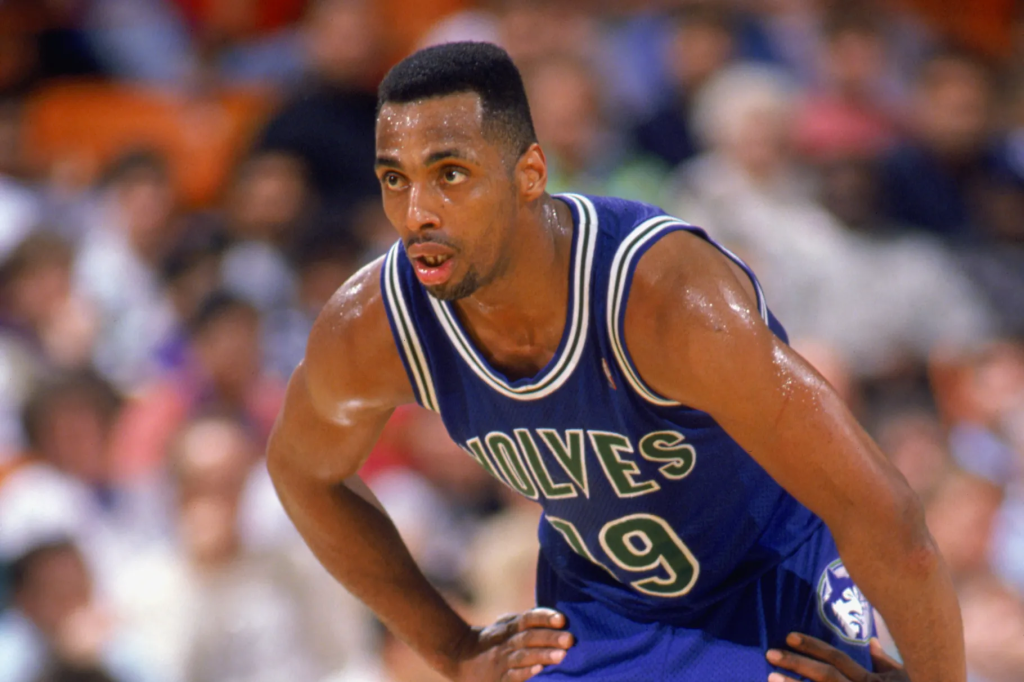
Photo by Ken Levine/Getty Images
Starting Five: Michael Williams, Tony Campbell, Ricky Davis, Christian Laettner, Nikola Pekovic
Sixth Men: Laphonso Ellis and Troy Hudson
Role Players: Dante Cunningham and Cherokee Parks
Bench Warmers: Tod Murphy, Jamal Crawford, Ramon Sessions
Team Musselman is much heavier on earlier iterations of the Wolves, with Tony Campbell and an efficient Michael Williams leading the backcourt, and Christian Laettner spearheading the offense among the big men. Nikola Pekovic is a solid pick that probably would have fit better in the NBA of the 80s, but was nonetheless very effective on offense when he was on the floor in 2014.
A lot of offense not geared toward three pointers on this team, without much defense. Might be a case of not everyone getting enough shots, and those shots not getting the team that many points.
Team Ryan
Starting Five: Stephon Marbury, Zach Lavine, Wally Szczerbiak, Dario Saric, Rasho Nesterovic
Sixth Men: Naz Reid and Malik Beasley
Role Players: Taurean Prince and Luke Ridnour
Bench Warmers: Derrick Williams, Shabazz Muhammed, Chuck Person
The Ryan Saunders team is essentially the fanboy Wolves roster with an eye on players that enjoy taking threes. It’s appropriate for a former Wolves ballboy that emphasized three point shots for players when he was coach, regardless of whether or not those players were good three point shooters.
Stephon Marbury, one of the most overrated Timberwolves of all time, was definitely a reach in the first round, as was Zach Lavine in the third. But Wally Szczerbiak might be the sixth best player in the draft so getting him in the second round is good value.
But this is another extremely perimeter heavy offense, without enough shots to go around between Marbury, Lavine, Wally, and Malik Beasley.
Team McHale
Starting Five: Pooh Richardson, Kevin Martin, Sam Mitchell, Joe Smith, Al Jefferson
Sixth Man: Malik Sealy
Role Players: Jeff Teague, Nemanja Bjelicia, Michael Olowokandi, Anthony Peeler
Bench Warmers: Marko Jaric and Rashad McCants
Kevin McHale always loved big men who knew how to score in the post, so Al Jefferson was the clear pick for him in the first round. While Joe Smith may seem like a reach at ninth overall, breaking all sorts of rules and losing all those draft picks just to sign someone that played the same position as Kevin Garnett was an even bigger reach back in the day, so this is another no brainer for Kevin.
Because of the abundance of pretty good point guards in Wolves history, driven by the fact that we’ve never had one stick around on a consistent basis, McHale gets good value with Jeff Teague in the ninth round. Apart from that this offense will revolve around Big Al post moves and some herky-jerky stuff that looks like it shouldn’t work from Kevin Martin but somehow does.
So who wins?
The next post will get a little more analytical about how each of these teams might play, projected numbers, some extremely subjective opinions on what would and would not work, and who has the biggest upside.
 Anything Was Possible
Leave a comment