
Ranking the ten worst players in Timberwolves franchise history is kind of an unfair exercise. Because if we’re ranking the ten worst Timberwolves in franchise history, counting coaches and the front office, the list would look drastically different than this one. You’d have Kevin McHale, David Kahn, Kurt Rambis, Randy Wittman, Tom Thibodeau, and of course, Glen Taylor. That’s not this list. But these players are a byproduct of those coaching and personnel decisions, many of which were perplexing and obvious at the time as well as in hindsight.
10. Wesley Johnson
In 2010 David Kahn drafted Wesley Johnson one spot ahead of DeMarcus Cousins. It’s usually not fair to compare a player to some All-Star drafted after them and label it a huge mistake, but in this case there’s no reason to feel bad about it. Wesley Johnson was a 22 year old that didn’t have a lot of upside, drafted at fourth overall. Cousins played one brilliant year at Kentucky and most people viewed him as a bit of a head case.
Kahn presumably drafted Johnson instead of Cousins because he was viewed as a “safer” pick and a better fit since the Wolves already had Kevin Love. He was someone that wouldn’t cause any trouble in the locker room. Wanting to draft someone in 2010 because they’re a 22 year old with more college experience that won’t demand many minutes, doesn’t have much upside, and that won’t cause problems in the locker room is the same logic that could have been applied to drafting me. It’s the NBA draft and you’re picking in the top five. Don’t go for a single. Try to draft someone that can change the direction of your franchise.
In his two years in Minnesota Johnson never averaged ten points, shot 40% from the field, or proved to be a serviceable defensive player. After the 2012 season Johnson’s stock was so low that the Wolves traded him for essentially nothing, packaging him with two second round picks for three second round picks. The best of those picks was Lorenzo Brown, whose NBA career has been roughly as distinguished as Wesley Johnson.
Somehow Johnson is still in the league. He had a couple halfway decent years for the LA teams coming off the bench and being a league average three point shooter. His biggest NBA moment was getting stared down by James Harden.
No, Wesley Johnson shouldn’t have been picked fourth overall. No, he didn’t amount to much. But he’s stuck around the NBA, and you’ve got to give him some credit for that. He didn’t torpedo any individual Wolves season. He didn’t cause very much franchise anguish over not living up to his potential, because it never seemed like he had that much potential to begin with. So in some ways, he’s the perfect microcosm of the Timberwolves franchise.
9. Michael Olowokandi
Listen, for the most part I regard the 2004 Timberwolves Western Conference finals team and all the players therein with the kind of reverence that is normally reserved for all time great teams like the 60s Celtics, 80s Lakers, or 90s Bulls. But there are some exceptions. Michael Olowokandi is a 7 foot exception.
When the Wolves signed him as a free agent he wasn’t that far removed from being picked number one overall in 1998, but that shine had long since worn off. But he’d averaged 9.1 rebounds the year before and the thought was that away from the dumpster fire franchise that was the Los Angeles Clippers at the time, maybe he could become a solid starting center for a playoff contender.
Olowokandi was supposed to provide a more athletic defensive option than the Wolves previous center, Rasho Nesterovic. He was more athletic than Rasho, but it seldom showed. During his time in Minnesota Olowokandi was usually either injured off the court or looking very confused on it. Olowokandi only played 43 games in 2004.
The minutes that he did play weren’t great, and fans often found themselves wishing the 37 year old Ervin “No Magic” Johnson could be inserted into the game in his place. That’s exactly what happened in the playoffs when the games mattered the most, with Johnson starting at center in 16 of the 18 games. Olowokandi got just about as many playoff minutes that year as Mark Madsen did, whose previous job had been to be the human victory cigar for the Los Angeles Lakers.
Olowokandi attempted just 16% of his shots within three feet of the rim. For a seven footer that didn’t have a very good mid range game, that’s a less than ideal percentage. By contrast, Johnson shot over half of his shots within three feet of the rim. 31% of Olowokandi’s shots came from 10-16 feet, from where he made 33% of his attempts.
His shot selection, defensive lapses, and sometimes nonchalant approach to being on the basketball court in general were all very unfortunate for the Wolves, because they didn’t have another good option in the frontcourt to pair with KG. Ervin Johnson was ancient and never that reliable to begin with. Mark Madsen was Mark Madsen. When the Wolves were playing a team with a big center and Olowokandi was on the court, engaged, and playing smart, Minnesota was at its best. That just didn’t happen all that often.
Much like any Timberwolf not named Kevin Garnett, things got worse after the playoff run ended. The next November he was arrested for refusing to leave a club and had to get tasered multiple times before he complied. Eventually, his time with the Wolves ended as it did with so many players during the Kevin McHale era, by getting traded to the Celtics.
8. Loren Woods
I know what you’re thinking. Who is Loren Woods? That’s a fair question. He played for the Wolves for two seasons in the early 2000s. He was their second round pick in the 2001 draft, number 46 overall.
So why pick on this poor guy? He made it to the league, and even played a few years in the NBA after the Wolves let him go. Well, through no fault of Loren Woods, the Wolves didn’t have a first round draft pick in 2001. Nor did they the year before or the year after. Woods was a typical second round pick. Second round picks don’t have great track records. But each fan base is obligated to get excited about its picks. They represent the future and you haven’t seen them play in the NBA yet so they haven’t yet crushed all your hopes and dreams for that future.
And as a Wolves fan in the early 2000s instead of being a semi-reasonable NBA fan talking yourself into your first round draft pick coming in and being a difference maker, you were trying to talk yourself into Loren Woods being a big piece of the puzzle.
“Hey, I know he fell to the second round and wasn’t even one of the top three players on his college team, but Loren Woods got 14 blocks in a game against Oregon last year! He could be our center of the future and be the guy that guards Shaq in the playoffs!”
Not a lot of rational thought was put into these hopes, but even in those golden years of being a Wolves fan it’s important to remember how bleak things were.
The final four was at the Metrodome in 2001, so part of me thinks that Kevin McHale just went to those three games and drafted the best player remaining from Arizona and Duke, the two teams that played in the final. Honestly it wouldn’t have been that much worse than any other strategy, the only player drafted after Woods to play more NBA minutes than him that year was Jarron Collins. He didn’t exactly light up the league either.
Obviously Loren Woods never went on to become an impact player for the Wolves or in the NBA. Nor did anyone rational ever think he would. But the annual tradition of Wolves fans trying to talk themselves into whatever 2nd rounder the team drafted was wearisome and Loren Woods exemplifies that better than anyone.
7. Derrick Williams
I remember thinking the 2011 NBA draft was two players deep. The Wolves entered the lottery with the best odds at landing the number one pick, as they have all too often. Yes, getting the number one pick and Kyrie Irving would have been ideal. He was probably the most talented player in the draft. But when the Wolves fell to second in the draft, I wasn’t shedding any tears. Derrick Williams would still be available.
After all, Kyrie barely played in college. He was completely untested. Derrick Williams led Arizona to the elite 8, beating Duke along the way. He scored 32 points in that game, 11-17 overall with 5-6 from three! We’d seen so many Wolves shrink from big moments, Derrick Williams seemed like a guy that could capture the moment.
He could score, rebound, he was even a good three point shooter! Plus, we had Ricky Rubio coming our way soon. Williams would be a much better fit next to Rubio than trying to shoehorn Irving into the starting lineup. Some people were worried that he was a power forward rather than a small forward so he wouldn’t be a good fit next to Kevin Love, but he certainly seemed athletic and fast enough to guard small forwards in the NBA.
Derrick Williams was going to be good. We knew this. We were used to the Wolves messing up in the draft. They didn’t this time. They took the best guy available. The kind of player that could create his own shot in the fourth quarter. This was all going to work out.
Of course it didn’t.
In his first two seasons with the Wolves Williams shot 42% from the field and 31% from three. He was out of place on defense, couldn’t create for others, and wasn’t good shooting off the catch. The Wolves traded him in his third year on the team.

Derrick Williams was supposed to work out. For once the Wolves were building a team with cornerstones in Rubio, Love, and Williams that actually made sense. They were supposed to accomplish great things, or maybe at least get to the playoffs once! Since the Wolves traded Sam Cassell in 2005 I’ve almost never bought the hype. Hope was a young man’s game when it came to the Timberwolves. They were screwing everything up left and right. It was easy to see.
But after the initial false start of the franchise rebuild post KG, it seemed like maybe we’d figured things out. We were done doing things like drafting Johnny Flynn and Wesley Johnson when it made no sense. The one time they actually did the right thing it still didn’t matter.
6. Jimmy Butler
Jimmy owns the distinction of being the only player named to the top ten best and worst ten Timberwolves lists. It’s easy to forget how much fanfare Jimmy Butler was met with when the Wolves traded for him. Everyone said it was the perfect match. He was playing for his favorite coach in Tom Thibodeau. He would help lead the defensive makeover the team needed.
Fans were so excited. Jimmy was excited. Thibs even smiled at the press conference at the Mall of America!
Yes, there were some unfortunate side effects to the Jimmy trade. Thibs went all in on the present, adding some solid (though older) veterans along with locking up younger players on long term deals to avoid any contract related locker room issues (that in particular worked very well).
But instead of leading a team and working with the younger players Jimmy chose to chastise them in the media, taking thinly veiled shots at KAT and Wiggins. The Wolves were actually really good when Jimmy was on the court and if he’d stayed healthy could have ended up with home court advantage in the first round of the playoffs. That didn’t happen though. Jimmy gave up on the team before the next season even started and made his way out of town.
Here are the notable moves the Wolves made in order to be as competitive as possible to build around Jimmy:
- Traded Kris Dunn, Zach Lavine, and the #7 pick for Jimmy Butler
- Traded Ricky Rubio for future first round pick (would become Josh Okogie)
- Signed Jeff Teague to a 3 year $57 million contract
- Signed Taj Gibson to a 2 year $28 million contract
- Signed Jamal Crawford to 1 year $4.3 million contract
- Extended Andrew Wiggins contract, 5 years $147 million
- Signed Derrick Rose
- Signed Luol Deng
On their own none of these moves is bad (ok, the Wiggins extension is). Even as a whole, they make sense if your goal is to go all in on the 2018-2020 seasons. The idea was that Jimmy Butler was a top ten player and that KAT could get there too. The plan made sense if they were building around those two. If they were only building around KAT, it made a lot less sense. Once Jimmy left, the team was left with the contracts and the decisions but not the direction.
Gersson Rosas is doing what he can to move the team on from the wreckage that Jimmy (and by extension, Thibs) left behind, but it will take time. He’s torn things down to the studs which is jarring but probably not a bad idea. Meanwhile, Jimmy chose his team for the first time in his career. A team where he is the unquestioned alpha, can show up to workout at 3:30 am and be preachy about it, have a capped out salary situation and hope that the team has enough to make it to the second round of the playoffs in the East.
5. Ndudi Ebi
When Ndudi Ebi got drafted by the Wolves near the end of the first round in 2003, most NBA fans didn’t notice. He was a high school kid, and he’d shown some flashes but there was a reason he was still available at 26. But those people weren’t Wolves fans. They perhaps forgot that it had been four years since the Wolves drafted anyone in the first round.
After the Joe Smith debacle the Wolves first round picks from 2000-2004 had been revoked by the NBA. But the Wolves had such a hapless front office that more than halfway through the punishment the NBA basically said “Eh, maybe taking away their first round picks for five years straight was a little harsh. We’ll give them a pity pick in 2003 since it won’t matter anyhow.”
They were right, it didn’t. But that didn’t stop some wild comparisons that were made on the basis that the last time Kevin McHale drafted a lanky high school kid he turned into a franchise player.
Ebi never got playing time with the Wolves. On the last day of the 2005 season, after they were already eliminated, he played 28 minutes, scored 18 points, and never again played in the NBA.
But why pick on Ebi? Just because he was the only first round draft pick in a five year window?
Well, yes.
Isn’t it unfair to treat a number 26 pick like this?
Well, no.
The next three picks after Ndudi Ebi were Kendrick Perkins, Leandro Barbosa, and Josh Howard. Those aren’t three players that I cherry picked from other various later points in the draft, those were the next three picks. Those were the players that other GMs had left at the tops of their boards.
Isn’t this more of a dig at Kevin McHale the GM than it is Ndudi Ebi the basketball player?
Undoubtedly. It’s something of a theme.
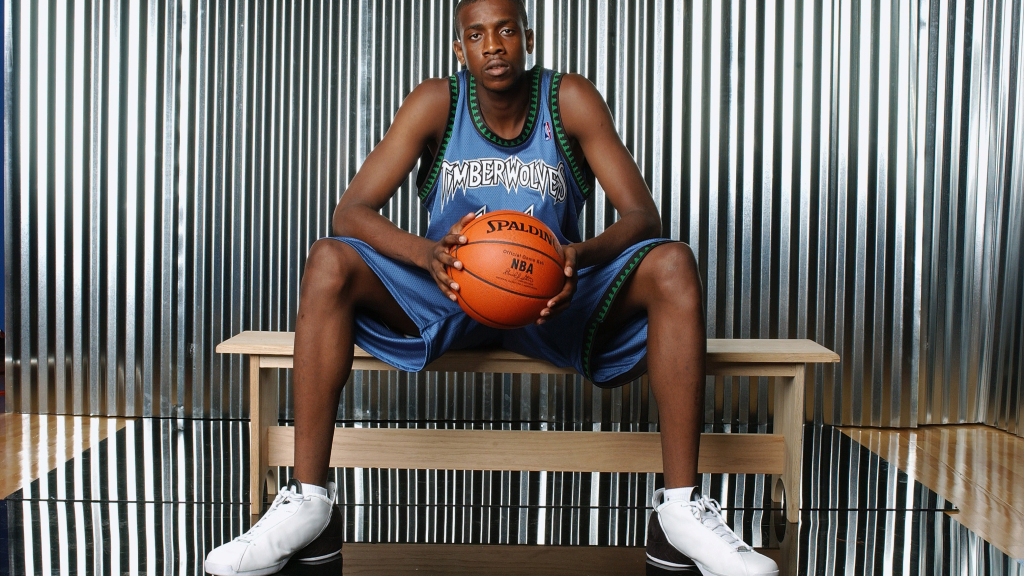
4. Jonny Flynn
I don’t know if there’s ever been a Wolves player that’s been more set up to fail than Johnny Flynn. He was a pick and roll player for Syracuse. The Wolves were running the Triangle offense (they really were!) with Kurt Rambis as head coach. The front office clearly viewed him as a stopgap until Ricky Rubio came over. He was drafted one spot ahead of Steph Curry, and even before he was STEPH CURRY that comparison reflected poorly on him. Flynn was on one of the worst Timberwolves teams of all time (and that’s really saying something!) that went 15-67.
Despite all that, he wasn’t bad in his rookie year. I mean, he definitely wasn’t good either, but so few rookie point guards are. He averaged 13.5 points per game, 4.4 assists, with a .511 true shooting percentage. But injuries and his lame-duck status resulted in that 2010 campaign being by far his strongest.
David Kahn has said the he didn’t take Curry because Curry didn’t want to come to Minnesota. But unlike Rubio, Curry wasn’t already a professional player in Europe. He didn’t have the kind of leverage that Rubio had. Curry wasn’t going to forgo the Wolves to move to Europe to play in Spain. He would have been under contract for four years, no escaping it.
But even leaving Curry aside, the 2009 draft was loaded. DeMar DeRozan had been linked as a possibility for the Timberwolves, and was the ninth pick. Drafting a wing would have made sense since Minnesota already had Jefferson and Love. Even if Kahn felt like he had to take a point guard, Brandon Jennings was available and picked tenth. He was just a year removed from being the most sought after high school prospect in the nation. He didn’t dominate Italy, but again, he was a rookie point guard.
In fact, here’s a list of the next seven point guards taken in the draft after Flynn:
7-Stephen Curry (Golden State)
10-Brandon Jennings (Milwaukee)
17-Jrue Holiday (Philadelphia)
18-Ty Lawson (Minnesota-good job David Kahn! Oh wait, traded to Denver for a future first that would be traded for Martell Webster)
19-Jeff Teague (Atlanta)
20-Eric Maynor (Utah)
21-Darren Collison (New Orleans)
Literally any of those guys would have been better.
But not only did Kahn make a mistake in choosing to draft Flynn, I would argue that choosing any rookie point guard after drafting Rubio would have been a mistake. Ricky was still very much a sensation at the time. He wasn’t likely going to come over to Minnesota regardless of who else the Wolves drafted, but any possibility was slammed shut when it turned out to be another point guard. And Flynn’s life in Minnesota was miserable for two seasons for the inescapable fact that he was the team’s second choice. The backup plan. Kahn made noise that the intention was for the two of them to play together but that was never going to happen. The Wolves undermined Flynn’s confidence by putting him in that situation. Any one of the point guards listed above likely would have had a worse career because of the Rubio situation had the Wolves drafted him.
3. Latrell Sprewell
I know what you’re thinking. Latrell Sprewell! On the Wolves worst players? Wasn’t he the gamer that helped the Wolves reach the conference finals and win two games even though Darrick Martin was nominally the starting point guard? Didn’t he go off in a number of Wolves regular season games to get the win?
And the answer is yes, those are things that happened. But is this really the line you want from one of your premier wings acting as a third option on a playoff caliber team?
17.7 points per game
4.4 rebounds per game
2 assists per game
.505 true shooting percentage
8.8% turnover rate
33% of shot attempts coming between 10 feet and the three point line
20% of shot attempts coming between 16 feet and the three point line
+4.1 on/off net per 100 possessions
Admittedly that’s a good turnover rate and solid on/off net ratings. But I don’t think that is the stuff that a good third player……oh wait, I’m sorry. Those are Andrew Wiggins numbers from the 2017-2018 Timberwolves team. The player that fans complained endlessly about. Here are Sprewell’s numbers in the same categories in 2004.
Obviously 2004 was a different time and mid range jumpers were more commonplace than they were in 2018. But that doesn’t change the fact that even in his good year with the Wolves, Sprewell was not what he once was.
16.8 points per game
3.8 rebounds per game
3.5 assists per game
.493 true shooting percentage
10.2% turnover rate
50% of shot attempts coming between 10 feet and the three point line
28% of shot attempts coming between 16 feet and the three point line
+5 on/off net per 100 possessions
When people talk about the 2004 Timberwolves they often refer to the big three of KG, Cassell, and Sprewell. Sprewell was never on the level of the other two. He wasn’t driving to the hoop nearly to the same degree that he was earlier in his career. He posted the lowest true shooting percentage of his career in 2004. He reversed his trend of increasing three pointers. He was at times a liability on defense (though not to the same degree that Wally was). He was taking shots away from Fred Hoiberg and Wally Szczerbiak. And all that was in his good season with the Wolves!
Heading into the 2005 season, Sprewell turned down a $21 million three year extension that the Wolves offered him, citing that he had a family to feed. That contract would have put him on the books through the 2008 season. Meanwhile, Sam Cassell (whose contract admittedly wasn’t up until after the 2006 season) did not receive a contract offer from the Wolves. This made Sam upset. His play suffered considerably. Eventually he was traded for Marko Jaric (more on Jaric soon). Sprewell, on the other hand, never played another game in the NBA after the 2005 season. So we should at least be thankful he turned down that contract extension.
So really, it was Latrell Sprewell, and the contract that the Timberwolves offered him, that sparked the end of the KG era in Minnesota. While it may have been temporarily unpopular in the Wolves locker room, the Wolves had an opportunity to trade Sprewell after the 2004 season. His perceived value was higher than it had been in years since he had latched onto KG and Sam’s coattails in a role that allowed him to hoist many inefficient shots. The Wolves knew he wasn’t going to accept an extension.
Hell, even just cutting bait and trading him for future second round draft picks would have been better. Wally would have taken his minutes, giving him less reason to grouse. And at that point, Wally was undoubtedly a better player. He wouldn’t have been offered a more than generous contract by the Wolves, which in turn meant that Cassell expected a similar offer. And the Wolves may have been able to live happily ever after, losing in the second round of the playoffs to either the Spurs or Suns.
Having gone back and watched a half dozen games from the Wolves 2004 regular season and another half dozen from the 2004 playoffs I’m not trying to say that Sprewell was a net negative, or even that he was net neutral. There is a time and place for what he provided, especially back then, when Wally was injured. But the reality is that his perceived value was always way higher than his actual value. And when the Wolves offered him that contract it was the beginning of the end.
2. Marko Jaric
In August 2005 the Timberwolves traded disgruntled all star Sam Cassell and a future first round draft pick (that would become Austin Rivers) to the Clippers for Marko Jaric in a sign and trade. Jaric’s contract was worth $38 million over six years.
It’d be easy to point out that Sam Cassell was great for the Clippers in the 2006 season. Cassell averaged 17 points, 6 assists, with a .534 true shooting percentage. All were improvements over his 2005 season. Cassell was again a starting point guard on a team that made a run in the Western Conference playoffs, finishing just one game away from qualifying for the Western Conference Finals.
Jaric averaged 8 points, 4 assists, with a .468 true shooting percentage. All were decreases from his 2005 season. Marko Jaric signed that six year deal for the Wolves but would be out of Minnesota after three seasons, and out of the NBA after just four.

People that try to rationalize this move, which seemed insane at the time, point out that Sam Cassell wasn’t nearly the same player in 2005 that he was in 2004. This was true, Cassell peaked in 2004 and made the all star game. He was in his mid 30s and not going to replicate that output on an annual basis.
Defenders of the move also point out that Cassell had become a problem in the locker room, expecting an extension past the 2006 season. They forget the fact that Cassell initially balked at playing for the Clippers too, but he played well to start the season, the Clippers were 9-2 in their first 11 games, and he was all smiles. He eventually did get a two year extension through 2008, but even in that 2006 season he made clear he was ready to move to the bench the following year to back up Shaun Livingston. Sam Cassell didn’t lack for braggadocio, but he didn’t have his head in the sand.
The Timberwolves went all in when they traded for Cassell and Sprewell. Then in 2005 after a bad start they pumped the brakes and tried to engage in a mini rebuild. Instead of trading Sprewell’s expiring contract for players that could have helped them make the playoffs they decided to let it come off the books. Instead of extending Cassell, or trading him for a player with a proven NBA track record, they brought in Marko Jaric, an untested NBA player and signed him to a six year deal. Instead of committing to KG they were hedging their bets, trying to maintain cap flexibility for a franchise that never attracts free agents and committing playing time and money to players like Jaric.
What’s weird is that in 2006 they changed course again, when they realized how upset KG was. So they traded Wally, who was actually having a good year despite his at times difficult relationship with KG, for Ricky Davis, Marcus Banks, and Mark Blount. Banks immediately cut into Jaric’s playing time, becoming the starting point guard. Banks would leave the Wolves that offseason.
Trading Sam Cassell made some sense, even if I wasn’t a fan of it then or now. But making Jaric the prize made no sense. KG was in win now mode. He was no longer a budding superstar. He needed players who were prepared to win now. Marko Jaric was a young guy that had played three seasons in the NBA without getting better. 2006 was his high water mark with the Timberwolves and he was best suited to be a backup point guard that season. Marko Jaric’s lackluster play, his contract, the decision to trade away Sam Cassell, everything about his time with the Timberwolves, was a mistake.
1. Joe Smith
Joe Smith. The debacle so large he is largely responsible for the fifth and eighth ranked players on this list. He looked pretty good his first two years playing for Golden State, fell off a bit, and then got traded to the 76ers. The lockout happened, and once that was resolved Smith signed a surprisingly small $1.75 million one year deal. Apparently the plan was for him to sign below market one year deals for three years to give the Wolves financial flexibility, then a max five year $86 million contract once the Wolves had his bird rights and could go over the cap to re-sign him.
Seems crazy, right? Well it was! Everything about it was crazy! Thinking it wouldn’t get out was crazy! Going all in on Joe Smith like this was even crazier! The fact that Joe Smith decided to come back to the Wolves after all this and the Wolves wanted to bring him back was even more bizarre.
He was a power forward, he played the same position as Kevin Garnett (I know KG was kind of considered a small forward in the 90s but he’d largely shifted to being a full time power forward by this point in his career).
As it ended up the Wolves ended up forfeiting their first round draft picks in 2000, 2001, 2002, and 2004. The players that were picked in the spots that the Wolves would have drafted were:
2000-Morris Peterson (21st overall)
2001-Jason Collins (18th overall)
2002-Tayshaun Prince (23rd overall)
2004-David Harrison (29th overall)
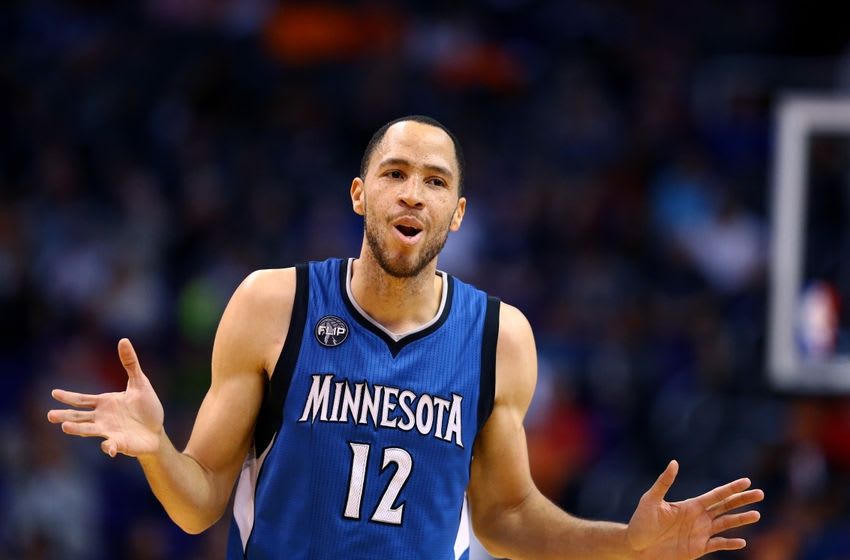
That shows a couple things. First, it’s not like these picks were lottery picks. They may not have been able to draft all stars but they could have drafted significant contributors. Or used those picks as assets in other trades to better build around KG.
But even those players could have been extremely helpful to the Wolves. Obviously Tayshaun Prince stands out. But let’s say the Wolves mess that up and end up drafting Dan Dickau or something. The Morris Peterson pick could have been huge! Imagine Morris Peterson being on the team for the latter half of KG’s time with the Wolves. He was a career 37% three point shooter, strong defensively, and didn’t have the ego the size of Montana.
When I think about all the ways in which the Timberwolves wasted so much of KG’s prime, it’s easy to imagine any replacement level executive doing better. Not coming to an illegal agreement that loses you four first round draft picks all in an effort to obtain a player that was clearly not even an all star level player that also plays the same position as your best player is an example of some low hanging fruit.
Joe Smith wasn’t terrible for the Timberwolves. He was actually one of their better players in the 2002 season. He wasn’t a problem in the locker room. He wasn’t someone who had the hopes and dreams of the franchise pinned on him. But the actions the front office took in bringing him in dashed those hopes and dreams before they could even manifest.
 Anything Was Possible
Leave a comment